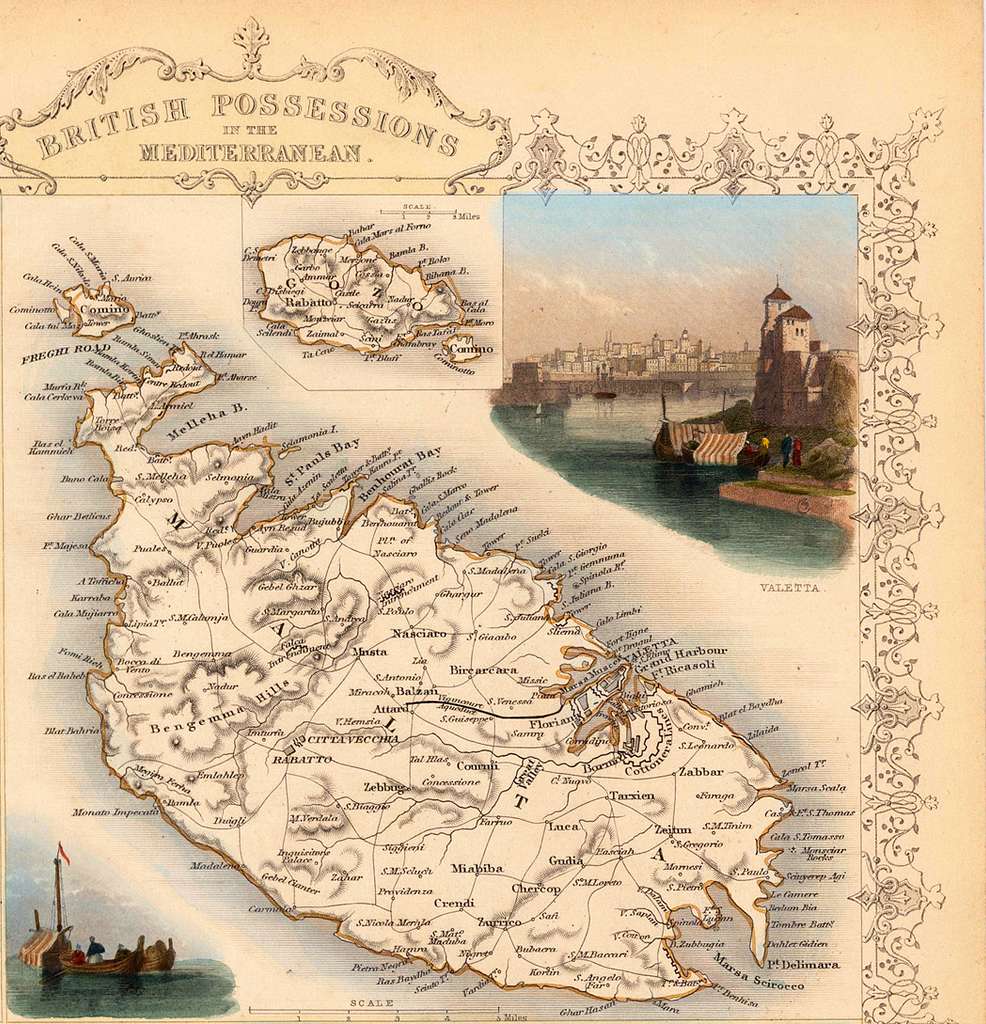
Malta has a fascinating history, shaped by the many different ‘powers’ who took possession of the islands, due to their prime position in the Mediterranean. For anyone interested, here is a very brief overview!
The first settlers to arrive in Malta probably came from Sicily before 5,000 BCE. You can still see prehistoric temples, older than both the pyramids of Egypt and Stonehenge, dotting the landscape.
Over the centuries, Malta’s strategic importance made it a crossroads of cultures and a valued prize for empires. The Phoenicians, who were skilled sailors and traders, colonized it around 800 BCE, using Malta as an outpost to expand their trade networks. Following the Phoenicians, the islands were ruled by the Greeks, the Carthaginians, and the Romans.
It was during Roman times, at around 60 CE, that the Maltese converted to Christianity. There is a famous story that the Apostle Paul was shipwrecked on the shores of Malta, whilst being taken to Rome for trial, and that he stayed there for three months. During this time, he is said to have performed several miracles, including healing the father of Publius, the Roman governor of the island. Publius converted to Christianity and subsequently became the first bishop of Malta.
After the fall of the Roman Empire, Malta saw a succession of rulers, including the Byzantines and Arabs. The Arabs introduced new agricultural methods and buildings, and influenced the Maltese language, which incorporates many Arab words and phrases.
The most defining era of Malta’s history began in 1530 when the Knights Hospitaller (the Knights of the Order of St John of Jerusalem) took control, as granted by the Spanish Emperor Charles V. They fortified the island, constructed impressive palaces and churches, and built the new capital city of Valletta.
In the early 19th century, Malta became a Crown Colony of the United Kingdom, a crucial naval base in the British Empire. The introduction of the Suez Canal in 1869 made Malta’s position even more important, serving as a key refueling station for ships en route to India and the Far East.
During World War II, Malta had to endure severe bombings due to its strategic position in the Mediterranean. The heroism of the Maltese people was recognised by the Award of the George Cross. In 1964, Malta gained independence from Britain. This September, Malta will celebrate 60 years of independence, 50 years of being a republic, and 20 years since joining the European Union.
 Lynne Marie Taylor
Leave a comment